


Coupon use far above the industry norm
About 1 in 4 stores we audit use coupons at least 50% above their industry norm. At that point, the coupon has stopped being a promotion and started becoming the expected price.
PDQ store audits
Most stores don't have a discount strategy; they have a discount habit. The fix isn't cutting codes cold. It's showing incentives only to the shoppers whose decision they change, replacing percentages with value (gifts, thresholds) where possible, and A/B testing the smallest offer that converts each segment.
Based on PDQ audits of 600+ Shopify stores, each benchmarked against its own industry.
About 1 in 4 stores we audit use coupons at least 50% above their industry norm. At that point, the coupon has stopped being a promotion and started becoming the expected price.
Discounts pull orders forward, but repeated blanket promotions teach shoppers never to pay full price. They wait, abandon the cart, and expect the recovery email to carry another code.
The cost compounds quietly. Margin goes first, then cart size and price integrity. The same discount reaches hesitant shoppers and customers who were buying anyway.
The goal is not removing every incentive. It is reserving each offer for the shoppers whose decision it changes, replacing price cuts with value where possible, and testing down to the smallest incentive that still converts.
An expired or mistyped code at checkout doesn't just fail the discount; it stalls the purchase and sends the shopper hunting for codes off-site. Discount code rejection recovery offers an alternative on the spot, so the moment converts instead of dead-ending.

A sitewide 10% treats the loyal repeat buyer and the hesitant first-timer identically. Segmented offers show the incentive only where it changes the outcome: first-timers, hesitant segments, specific zones, or channels, while everyone else pays full price. PDQ segments shoppers on 1,600+ signals.
A gift unlocked at a spend threshold adds perceived value without cutting price. Margin stays intact, and shoppers don't learn that full price is negotiable. Here, gift-with-purchase is the margin-protecting alternative to a percentage discount.
Progress-bar incentives toward a cart goal or free-shipping threshold flip the mechanic: instead of shrinking the order to fit a code, shoppers grow it to reach a reward.
The question isn't discount or don't. It's the smallest incentive that converts each segment. A/B test offer type and depth against a control, keep what pays for itself, and cut what's just giving margin away.
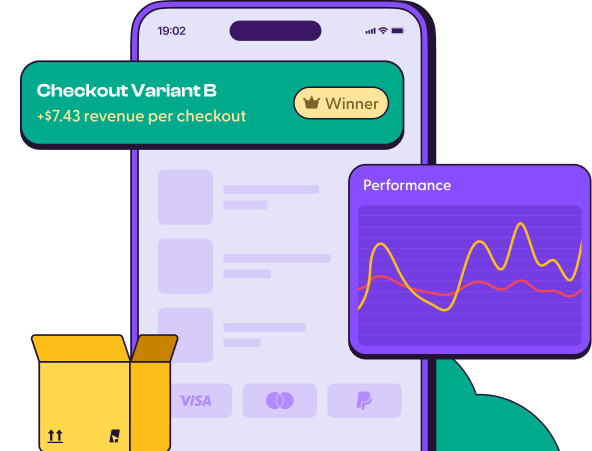
A general result across PDQ's winning experiments, not a discount-specific performance claim.

Below-industry AOV? Raise it with offers matched to each cart and customer
Not sure where you're leaking? Start with the 12 most common checkout issues, from 600+ store audits.
Stop losing 7 in 10 shoppers at the finish line

Show every customer their optimal checkout to maximize your profits
